
Background

Where this work started, and the public advocacy that came before the Belonging Model.
The Keynote
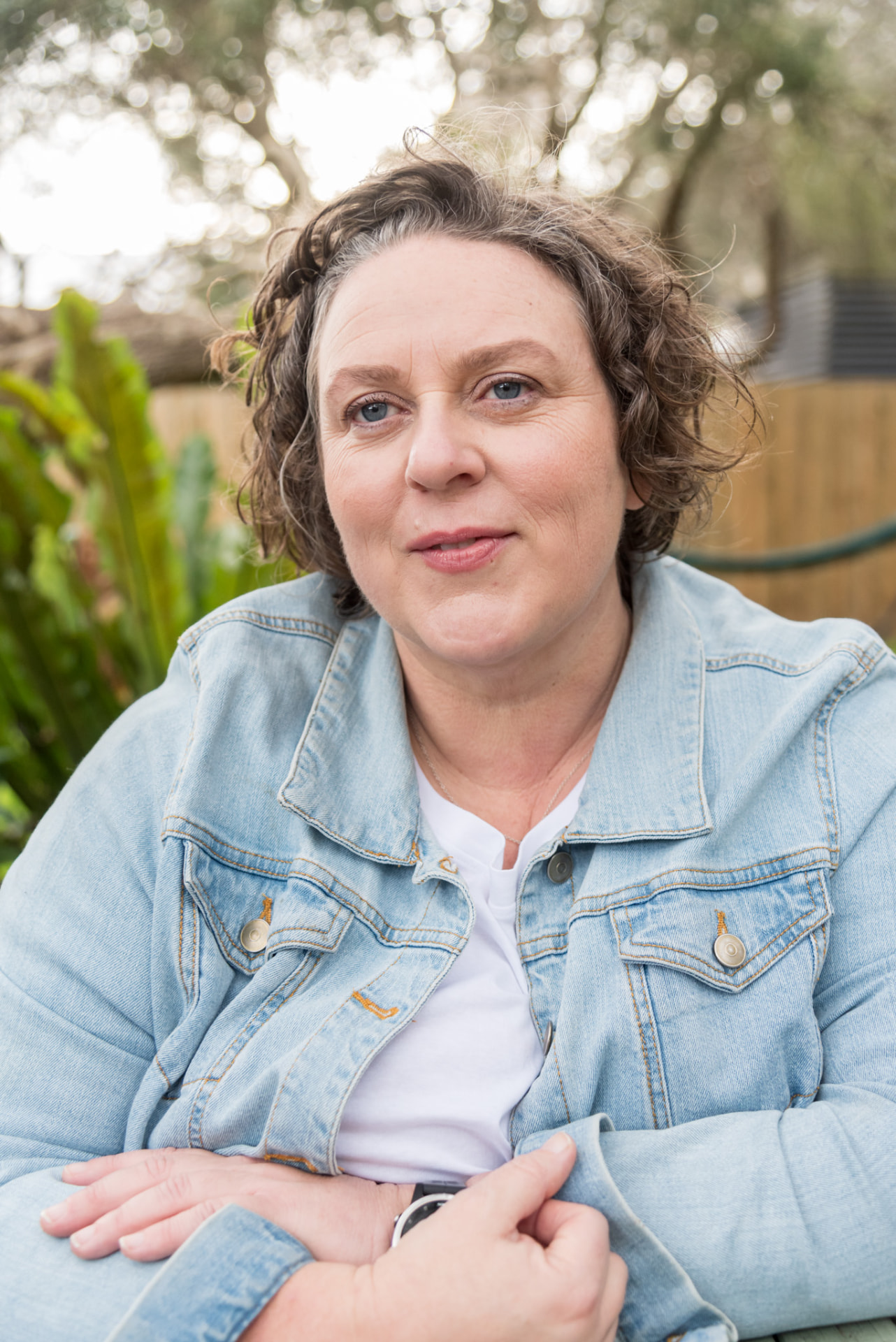
From Exile to Belonging
Twenty-five years, two exiles, and what changed when the problem turned out to be the design.
Six Times a Year
This is the talk I charge the most for. It asks the most of me. It is my brother, my own distress, and twenty-five years of working out what happened to both of us. I give it whole, which is why I give it six times a year and not more.
The fee does something specific. It funds free resources for neurodivergent workers, and builds spaces of belonging for people who will never be in a room like this one. You get the talk. Someone who could never afford a conference ticket gets something they need.
Speaking across Australia since 2001. Selected as one of eleven Australians for the inaugural National Future Leaders in Mental Health Project with the National Mental Health Commission. NSW Northern Tablelands Woman of the Year, 2014.
Content note: refers to a missing family member, death, psychosis, suicidal distress and personal mental health experience.
In January 2001, my brother Ben McFarlane went missing in Mt Baw Baw, Victoria, during his final psychotic episode. His remains have never been found. I was part of the search.
For years I talked about what that taught me about the mental health system. Why Ben was discharged at his worst. Why the teams around him were not trained in what he actually had. That talk was worth giving, and I gave it for a long time.
There is a second half now, and it changes the ending.
So I walked. Ten months after he disappeared, six hundred kilometres of the Bibbulmun Track in Western Australia, the walk Ben and I had planned to do together. I carried the guidebook he gave me. Then the Camino, eighteen hundred and fifty kilometres over the Pyrenees. Then Shikoku, fourteen hundred kilometres around the eighty-eight temples. Then I walked Armidale, New South Wales, to Melbourne, seventeen hundred kilometres, through Mt Baw Baw.
I did not set out to process anything. Standing still was unbearable and walking was the only thing that helped. But you cannot walk that far without the same questions turning over, and mine would not let go. How does a system exile someone and call it a discharge. Who else is it happening to right now.
I understand now that the relentlessness was my brain. Monotropic attention does not release a question until it has an answer. At the time I thought I was stuck. It turned out I was working.
Then I started a PhD to find out where stigma comes from. I read everything current, and all of it framed mental illness through deficit, risk and loss. I went home distressed most days.
So I flipped the question. Not for comfort, but because I could not keep working inside a frame that only described damage. I asked whether mental ill-health could enrich a life. I found eleven articles. Eleven.
My honours work had been on whether mindfulness could reduce stigma toward outgroups, and I knew the chronic pain research, where turning attention toward different sensory experience reduces the pain that is actually felt. Attention shapes the experience.
Which raised a question I could not put down. If a whole society only looks at mental illness through deficit, risk and loss, does that attention itself manufacture the stigma? And if we widened the view without ever minimising the suffering, would we see it more accurately, and would the prejudice have less to hold on to?
That took me into the history. The religious model, the medical model, each one confident and each one eventually replaced. We needed a new one.
I did not finish the PhD. I was undisclosed autistic in an environment with almost no structure, unpredictable demands and significant power imbalance, and I went into burnout. When I reached out, the response was minimisation, from someone whose own work was about care. That is the pattern: institutions speak the language of care and turn away from the people most in need of it. I stepped away to protect my life.
The model I could not finish writing was the thing that explained what had happened to me.
Because I was AuDHD, autistic and ADHD, and I had been living at the edge of belonging my whole life without a name for it. The diagnosis arrived like a cloak of compassion. Everything I had read as personal failure turned out to be a nervous system reporting accurately on conditions that did not fit it. That is not a small reframe. It is the difference between a life spent apologising and a life spent designing.
I have kept diaries for twenty-five years. When the model was built I went back through them and read my own life against it, looking for where it did not fit. That work is still going. Contemporaneous records, written by someone with no framework at the time and no reason to make anything come out neatly, are a hard test. The model has held, and where it has not, it has changed.
Ben was exiled by systems that could not hold him. I was exiled more quietly, for longer, by systems nobody thought to question. Same mechanism, different volume. And a mechanism is a thing you can change.
That is what the Belonging Model is for. Two premises: the problem lives in the fit, not the person. Body first, story second, meaning what a nervous system is reporting comes before the story anyone tells about it. From there everything is design, and design is something a room full of people can go and do on Monday.
The question underneath all of it has not changed since 2001. How do we create a world where no one is punished or disappeared for being different?
Nobody comes back from exile alone.
From the Stage
On Stage and on Air Since 2001
Conferences, universities, government agencies and community organisations.

Broadcast and Podcast
-
Losing my brother Ben, and turning that loss into purpose
Don't Be Caught Dead podcast with Catherine Ashton, Critical Info, October 2024. Listen on criticalinfo.com.au.
Content note: discusses schizophrenia, a missing-person search and death. - The model explained out loud: late diagnosis, rupture and repair, and belonging AuDHD IRL podcast with Brianna Thomas, episode 9. The move from deficit models to a belonging framework, and why rupture and repair sit at the centre of it. Listen on briannathomaspsychology.com.
What Audiences Say
"Brilliant and very moving. I cannot think of anything to change or improve."
Carer advocate, mental health sector
"Only standing ovation of the conference. Hardly a dry eye in the house, and we left with a positive message."
Carer advocate, mental health sector
"Struck very much by what you have achieved for yourself and for others. Both enlightening and inspiring."
Support worker, mental health services
"She didn't raise her voice or use video clips, she just told a humble story. The audience was totally spell-bound throughout."
Event organiser, youth mental health forum
"Great presentation, it opened my eyes a lot."
Audience member, community mental health event
"Inspiring to see the power of community, and good come from grief."
Audience member, community mental health event
Talks
The Framework, Taken into a Specific Room
Face to face or online. Sixty to ninety minutes, or half a day. Every session ends with takeaways participants can use at work.
Every talk is tailored. A briefing call first, then the examples, sector and framing are built for the room, so the audience hears their own work described rather than someone else's.
Sample the thinking first. Read the writing on Substack.
Creating a Culture of Belonging
Why inclusion adds on to a design built for someone else, and belonging redesigns it. Compliance as the floor rather than the goal, and what changes when an organisation stops asking people to fit.
See The FrameworkWhen the Same People Always Bend
Adaptation is not shared equally. The same colleagues absorb the change, cover the gap and carry the load, until the cost shows up as turnover, injury or silence. What one-sided adaptation costs an organisation, and how design redistributes it.
See ConsultancyRunning Events People Come Back From
An event has two populations, staff and delegates, and the design usually serves neither. What excludes people at registration, in the program and in the room, and what to change first.
See EventsNobody Is Disposable
What happens to people pushed to the edges of an organisation, and what an organisation owes someone before that point. Non-disposability as a governance principle rather than a value statement.
